V 著 vs. 在+V:持續狀態與進行動作完整比較|HSK 3–4

HSK 3–4 / TOCFL A1–A2

V 著 vs. 在+V:持續狀態與進行動作完整比較
V zhe vs. zài + V: Chíxù zhuàngtài yǔ jìnxíng dòngzuò wánzhěng bǐjiào
V-zhe vs. zài + verb: continuing states and actions in progress

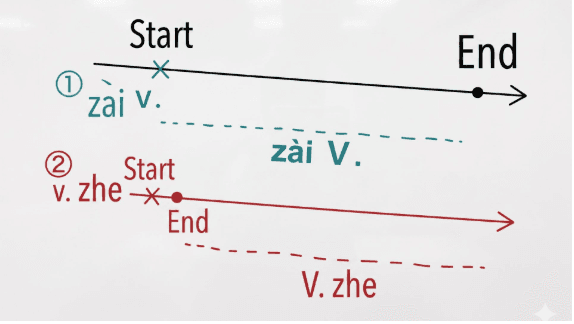
「在+V」和「V 著」都能談持續中的情況,但兩者觀察事件的角度不同。「在+V」把焦點放在正在進行的動作;「V 著」則常描寫動作形成後仍維持的狀態、姿勢或伴隨方式。
“Zài + V” hé “V zhe” dōu néng tán chíxù zhōng de qíngkuàng, dàn liǎng zhě guānchá shìjiàn de jiǎodù bùtóng. “Zài + V” bǎ jiāodiǎn fàng zài zhèngzài jìnxíng de dòngzuò; “V zhe” zé cháng miáoxiě dòngzuò xíngchéng hòu réng wéichí de zhuàngtài, zīshì huò bànsuí fāngshì.
Both zài + verb and verb-zhe can describe something continuing, but they view the situation differently. Zài + verb focuses on an action in progress, while verb-zhe often describes a resulting state, posture, or accompanying manner that remains in effect.
本課會用約會、排隊和下雨的生活對話比較兩種句型,並透過四張圖片練習判斷說話者想強調的是「動作正在發生」還是「狀態持續存在」。
Běn kè huì yòng yuēhuì, páiduì hé xiàyǔ de shēnghuó duìhuà bǐjiào liǎng zhǒng jùxíng, bìng tòuguò sì zhāng túpiàn liànxí pànduàn shuōhuà zhě xiǎng qiángdiào de shì “dòngzuò zhèngzài fāshēng” háishì “zhuàngtài chíxù cúnzài”.
This lesson compares the two patterns through everyday conversations about meeting someone, waiting in line, and rain. A four-picture quiz then helps you decide whether the speaker highlights an unfolding action or a continuing state.

先掌握核心差異

① 在+V / zài + verb

在+V:強調動作現在正在進行,說話者把視角放在動作的過程中。也常說「正在+V」。例:他在等你、外面在下雨。
Zài + V: Qiángdiào dòngzuò xiànzài zhèngzài jìnxíng, shuōhuà zhě bǎ shìjiǎo fàng zài dòngzuò de guòchéng zhōng. Yě cháng shuō “zhèngzài + V”. Lì: Tā zài děng nǐ, wàimiàn zài xià yǔ.
Zài + verb emphasizes that an action is currently in progress. The speaker views the event from inside its unfolding process. Zhèngzài + verb is also common. Examples: Tā zài děng nǐ; Wàimiàn zài xià yǔ.
② V 著 / verb-zhe

V 著:強調某個動作完成或開始後形成的狀態仍然維持,也能表示做另一個動作時的姿勢或方式。例:門開著、坐著等、穿著紅衣服。
V zhe: Qiángdiào mǒu ge dòngzuò wánchéng huò kāishǐ hòu xíngchéng de zhuàngtài réngrán wéichí, yě néng biǎoshì zuò lìng yí ge dòngzuò shí de zīshì huò fāngshì. Lì: Mén kāizhe, zuòzhe děng, chuānzhe hóng yīfú.
Verb-zhe emphasizes that a state created after an action begins or finishes remains in effect. It can also show the posture or manner accompanying another action. Examples: Mén kāizhe; zuòzhe děng; chuānzhe hóng yīfú.

生活對話例句

① 在+V:action in progress
(在家,男朋友在門口等)
(Zài jiā, nán péngyǒu zài ménkǒu děng.)
(At home; the boyfriend is waiting at the door.)
媽媽:你是不是跟男朋友約好去博物館?
Māma: Nǐ shì bú shì gēn nán péngyǒu yuē hǎo qù bówùguǎn?
Mother: Didn’t you make plans with your boyfriend to go to the museum?
你:對呀!我正在準備。
Nǐ: Duì ya! Wǒ zhèngzài zhǔnbèi.
You: Yes! I’m getting ready.
媽媽:他在等你,你快一點!
Māma: Tā zài děng nǐ, nǐ kuài yìdiǎn!
Mother: He’s waiting for you. Hurry up!
你:好啦!我馬上就好。
Nǐ: Hǎo la! Wǒ mǎshàng jiù hǎo.
You: Okay! I’ll be ready in a second.
② 坐著+V:maintained posture + another action
(在餐廳外面排隊)
(Zài cāntīng wàimiàn páiduì.)
(Waiting in line outside a restaurant.)
A:你等一下想吃什麼?
A: Nǐ děng yíxià xiǎng chī shénme?
A: What would you like to eat?
B:我想吃這個、這個,還有這個。
B: Wǒ xiǎng chī zhège, zhège, hái yǒu zhège.
B: I’d like this, this, and this.
A:好,還要別的嗎?
A: Hǎo, hái yào bié de ma?
A: Okay. Anything else?
B:不用了,這樣就好。
B: Búyòng le, zhèyàng jiù hǎo.
B: No, that’s enough.
A:好,我去點餐。啊!那裡有位子,你先去坐著等我。
A: Hǎo, wǒ qù diǎncān. À! Nàlǐ yǒu wèizi, nǐ xiān qù zuòzhe děng wǒ.
A: Okay, I’ll order. Ah, there are seats over there. Go sit down and wait for me.
B:好,謝謝!
B: Hǎo, xièxie!
B: Okay, thanks!

「下著雨」vs.「在下雨」

「外面在下雨」是在報告眼前正在發生的天氣;「那天下著雨」則把下雨當作故事背景中持續的狀態。兩句都正確,差別在說話者要突出的焦點。
“Wàimiàn zài xià yǔ” shì zài bàogào yǎnqián zhèngzài fāshēng de tiānqì; “nà tiān xiàzhe yǔ” zé bǎ xiàyǔ dàngzuò gùshì bèijǐng zhōng chíxù de zhuàngtài. Liǎng jù dōu zhèngquè, chābié zài shuōhuà zhě yào tūchū de jiāodiǎn.
Wàimiàn zài xià yǔ reports the weather event happening now. Nà tiān xiàzhe yǔ presents the rain as a continuing background state in a story. Both are grammatical; the difference is the speaker’s focus.
① 外面在下雨:current event
(在咖啡廳)
(Zài kāfēitīng.)
(In a café.)
A:聊了三個小時了,差不多要回家了。
A: Liáo le sān ge xiǎoshí le, chàbuduō yào huí jiā le.
A: We’ve been chatting for three hours. It’s about time to go home.
B:外面在下雨,等雨小一點再走吧!
B: Wàimiàn zài xià yǔ, děng yǔ xiǎo yìdiǎn zài zǒu ba!
B: It’s raining outside. Let’s wait until it eases up before leaving.
A:好吧!
A: Hǎo ba!
A: Alright!
② 那天下著雨:background state
(跟朋友聊天)
(Gēn péngyǒu liáotiān.)
(Chatting with a friend.)
B:你跟女朋友是在哪裡認識的?
B: Nǐ gēn nǚ péngyǒu shì zài nǎlǐ rènshi de?
B: Where did you meet your girlfriend?
A:在美國。那天下著雨,可是我忘了帶傘,只能在咖啡廳門口站著等雨停。
A: Zài Měiguó. Nà tiān xiàzhe yǔ, kěshì wǒ wàng le dài sǎn, zhǐ néng zài kāfēitīng ménkǒu zhànzhe děng yǔ tíng.
A: In the United States. It was raining that day, but I had forgotten my umbrella, so I could only stand at the café entrance and wait for the rain to stop.
B:然後呢?
B: Ránhòu ne?
B: And then?
A:她從咖啡廳出來,看到我沒帶傘,就問我要去哪裡。我說:「我想去地鐵站,可是有點遠,我忘了帶傘……。」
A: Tā cóng kāfēitīng chūlái, kàndào wǒ méi dài sǎn, jiù wèn wǒ yào qù nǎlǐ. Wǒ shuō: “Wǒ xiǎng qù dìtiězhàn, kěshì yǒudiǎn yuǎn, wǒ wàng le dài sǎn…”
A: She came out of the café, saw that I didn’t have an umbrella, and asked where I was going. I said, “I want to go to the subway station, but it’s a little far, and I forgot my umbrella…”
B:所以她問你要不要一起走?
B: Suǒyǐ tā wèn nǐ yào bú yào yìqǐ zǒu?
B: So she asked whether you wanted to walk together?
A:對,我們就這樣認識了,哈哈哈。
A: Duì, wǒmen jiù zhèyàng rènshi le, hāhāhā.
A: Yes, and that’s how we met, hahaha.

圖片選擇練習

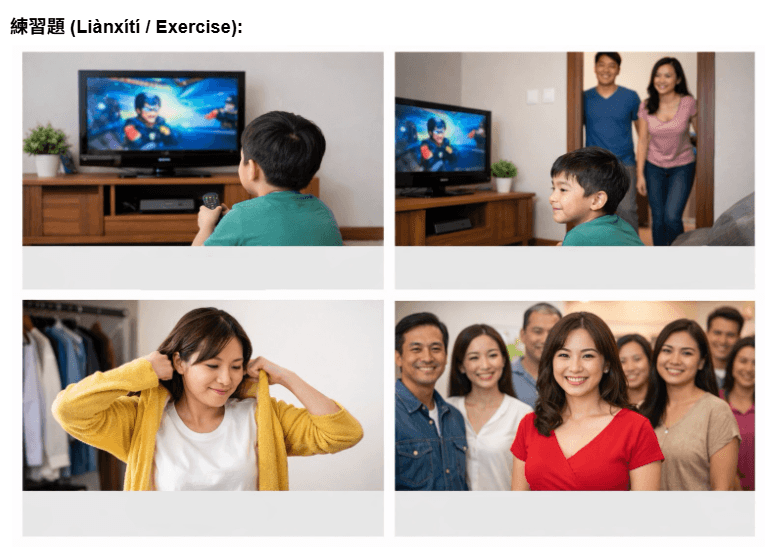
依圖片凸顯的重點,選出最自然的句子。
V 著與在+V四題情境選擇練習
查看答案與解析
  1. 男孩正在看電視:焦點是正在進行的活動。
  2. 電視開著:焦點是電視維持開啟的狀態。
  3. 她正在穿外套:動作正進行到一半。
  4. 她穿著紅色的衣服:衣服已穿在身上,狀態持續。

提醒:沒有上下文時,部分圖片可能有不同描述;本題依畫面凸顯的動作或狀態作答。

中文語法「V 著」(2):命令與提醒用法、例句和練習|HSK 3–4

HSK 3–4 / TOCFL A1–A2

中文語法「V 著」(2):請別人維持一個動作

除了描述持續狀態,「V 著」也常用在命令、提醒或指示中,要求對方開始一個動作,並在一段時間內維持這個動作。生活中常見的「你等著」、「聽著」和「看著我」都屬於這種用法。語氣可以是友善提醒,也可能因情境而顯得強烈,因此需要留意說話方式。

Chúle miáoshù chíxù zhuàngtài, “V-zhe” yě cháng yòng zài mìnglìng, tíxǐng huò zhǐshì zhōng, yāoqiú duìfāng kāishǐ yí ge dòngzuò, bìng zài yí duàn shíjiān nèi wéichí zhège dòngzuò.

Besides describing a continuing state, V-zhe is often used in commands, reminders, or instructions that ask someone to begin and maintain an action.

核心用法

結構:請/你+V 著(+賓語)

Jiégòu: qǐng / nǐ + V-zhe (+ bīnyǔ).

Pattern: please/you + verb + 著 (+ object).

這個句型不是只叫對方「做一下」,而是要求對方維持動作。例如「你在這裡等著」表示從現在開始留在原地等待;「請看著我說話」表示說話時要一直看著對方。

生活例句

媽媽(跟孩子說):請看著我說話。

Māma (gēn háizi shuō): Qǐng kànzhe wǒ shuōhuà.

Mother (to her child): Please look at me when you speak.

男朋友(跟女朋友說):你在這裡等著,我等一下就回來!

Nán péngyǒu (gēn nǚ péngyǒu shuō): Nǐ zài zhèlǐ děngzhe, wǒ děng yíxià jiù huílái!

Boyfriend (to his girlfriend): Wait here. I’ll be back in a moment!

我(跟孩子說):你聽著,這件事不可以跟爸爸說喔!

Wǒ (gēn háizi shuō): Nǐ tīngzhe, zhè jiàn shì bù kěyǐ gēn bàba shuō ō!

Me (to a child): Listen, you must not tell Dad about this!

練習題

填入最自然的「V 著」,點擊題目查看答案與解析。

1. 我去一下廁所,你可以幫我_____包包嗎?

答案:看著
Wǒ qù yíxià cèsuǒ, nǐ kěyǐ bāng wǒ kànzhe bāobāo ma?
「看著包包」表示在我離開時持續照看包包。

2.(在咖啡廳)你_____,咖啡我去拿就可以了。

答案:坐著
Nǐ zuòzhe, kāfēi wǒ qù ná jiù kěyǐ le.
說話者請朋友維持坐著的狀態,自己去拿咖啡。

3.(教室裡學生很吵)老師:你們_____,這件事情很重要。

答案:聽著
Nǐmen tīngzhe, zhè jiàn shìqíng hěn zhòngyào.
「聽著」是較強的提醒,要求學生開始並持續注意聽。

中文語法「V 著」怎麼用?狀態持續、例句與練習|HSK 3–4

HSK 3–4 / TOCFL A1–A2

中文語法「V 著」:用法、例句與練習

「V 著」是日常中文裡非常實用的結構,用來描述某個動作完成後留下的狀態,或某個動作、姿勢在另一件事發生時持續進行。學會這個句型後,你就能自然地表達「門開著」、「她穿著紅裙子」和「他站著聊天」等生活情境。

“V-zhe” shì rìcháng Zhōngwén lǐ fēicháng shíyòng de jiégòu, yòng lái miáoshù mǒu ge dòngzuò wánchéng hòu liúxià de zhuàngtài, huò mǒu ge dòngzuò, zīshì zài lìng yí jiàn shì fāshēng shí chíxù jìnxíng.

V-zhe is a useful Mandarin pattern for describing a continuing state resulting from an action, or an action or posture that continues while something else happens.

一、核心用法

結構:主語+V 著+賓語/補充內容

Jiégòu: zhǔyǔ + V-zhe + bīnyǔ / bǔchōng nèiróng.

Pattern: subject + verb + 著 + object/complement.

「著」讀輕聲 zhe。它不強調動作正在發生,而是把焦點放在持續的狀態。例如「門開著」表示門目前保持開啟;「他站著聊天」表示站立是聊天時持續的姿勢。

二、生活例句

天氣變冷了,不要開著窗戶睡覺。

Tiānqì biàn lěng le, búyào kāizhe chuānghù shuìjiào.

The weather has turned cold. Don’t sleep with the window open.

朋友:我可以進去嗎?
你:門開著,可以直接進來!

Péngyǒu: Wǒ kěyǐ jìnqù ma?
Nǐ: Mén kāizhe, kěyǐ zhíjiē jìnlái!

Friend: May I come in?
You: The door is open. You can come right in!

朋友:哪個是你的男朋友?
我:穿著黑色衣服的那個。

Péngyǒu: Nǎge shì nǐ de nán péngyǒu?
Wǒ: Chuānzhe hēisè yīfú de nàge.

Friend: Which one is your boyfriend?
Me: The one wearing black clothes.

朋友:小明昨天晚上去哪裡?
我:他帶著太太和孩子一起去看電影。

Péngyǒu: Xiǎomíng zuótiān wǎnshàng qù nǎlǐ?
Wǒ: Tā dàizhe tàitai hé háizi yìqǐ qù kàn diànyǐng.

Friend: Where did Xiaoming go last night?
Me: He took his wife and child to see a movie with him.

要出發了!你怎麼還在那裡站著聊天?

Yào chūfā le! Nǐ zěnme hái zài nàlǐ zhànzhe liáotiān?

It’s time to leave! Why are you still standing there chatting?

三、練習題

請填入最自然的「V 著」。點擊題目即可查看答案。

1. 他_____窗外的風景。

答案:看著。Tā kànzhe chuāngwài de fēngjǐng. — He is looking at the scenery outside.

2. 門_____,請進來。

答案:開著。Mén kāizhe, qǐng jìnlái. — The door is open. Please come in.

3. 請_____我說話。

答案:看著。Qǐng kànzhe wǒ shuōhuà. — Please look at me when you speak.

4. 老師_____說話。

答案:站著。Lǎoshī zhànzhe shuōhuà. — The teacher is speaking while standing.

5. 桌上_____好多書。

答案:放著。Zhuō shàng fàngzhe hǎoduō shū. — Many books are lying on the table.

6. 你在這裡_____,媽媽馬上就來了。

答案:等著。Nǐ zài zhèlǐ děngzhe, māma mǎshàng jiù lái le. — Wait here; Mom will be here soon.

7. 學生_____上課。

答案:坐著。Xuésheng zuòzhe shàngkè. — The students attend class while sitting.

8. 她_____一件紅色的裙子。

答案:穿著。Tā chuānzhe yí jiàn hóngsè de qúnzi. — She is wearing a red skirt.

9. 公園裡很多人_____歌、_____舞。

答案:唱著、跳著。Gōngyuán lǐ hěnduō rén chàngzhe gē, tiàozhe wǔ. — Many people are singing and dancing in the park.

10. 這裡有很多人,你要_____媽媽,不然很危險。

答案:跟著。Zhèlǐ yǒu hěnduō rén, nǐ yào gēnzhe māma, bùrán hěn wēixiǎn. — There are many people here. Stay with Mom, or it could be dangerous.

Whitney Mandarin Studio
課程預約及服務條款

為保障雙方權益,在您(以下簡稱「學員」)進行課程預約及付款前,請務必詳閱以下服務條款。當您完成預約或付款程序時,即視為您已閱讀、瞭解並同意遵守本條款之所有內容。

一、 法源依據與解除權之排除

本課程服務屬於「非以有形媒介提供之數位內容或一經提供即為完成之線上服務」,且本課程內容係依學員需求進行「客製化給付」。依據《消費者保護法》第 19 條第 1 項但書及《通訊交易解除權合理例外情事適用準則》第 2 條第 2 款及第 5 款規定,本服務排除七日猶豫期(鑑賞期)之適用。學員同意於課程預約成立後,除本條款另有約定外,不得主張無條件退費。

二、 授課時間與出缺席規範

本課程採預約制,為維護教學品質及雙方時間權益,應共同遵守以下規範:

1. 學員遲到與缺席責任(受領遲延):
  • 彈性等候時間:課程設有 20 分鐘之連線緩衝時間。課程表定開始時間起算 20 分鐘內,學員皆可上線進行課程,惟課程結束時間將依原定時間結束,不予順延。
  • 視為缺席:若學員於課程開始後逾 20 分鐘仍未上線,即構成民法上之受領遲延。視同學員無故缺席,該堂課程視為已履行教學義務,本工作室不予補課,亦不退還該堂費用。
  • 遲到不補時:若學員遲到(未逾 20 分鐘),授課教師將依原定時間進行教學至表定結束時間止,遲到之時間視為學員自願放棄,不提供補時、補課或依比例退費。
2. 講師遲到與補救措施(給付遲延):
  • 若授課教師於課程開始後逾 10 分鐘仍未上線,即構成給付遲延。
  • 針對該次遲延,本工作室將提供補課機會,學員得請求重新選擇上課時間,以保障受教權益。

三、 請假與補課規範

1. 一般請假(24小時前):

學員如欲更改上課時間或請假,至遲應於該堂課程表定開始時間 24 小時前通知本工作室。於期限內完成通知程序者,得保留該堂課程權益並另行安排補課。

2. 臨時請假或未通知(24小時內):

若未於前述期限(課前 24 小時)內通知、或於課前 24 小時內臨時請假者,因授課教師之時段已保留且無法另行安排,視同該堂課程已正式使用。學員不得請求補課、延期或退還該堂費用。

四、 預約限制與課程內容授權

1. 不受理臨時預約:

為確保教學品質及行政作業流程,本課程不接受臨時插課或當日預約。所有課程均須依規定程序提前完成預約。

2. 智慧財產權與錄影規範:
  • 本課程內容均為針對學員需求之「客製化設計」,其教材、講義及教學過程之智慧財產權歸屬於本工作室或授課教師所有。
  • 本課程不提供錄影檔案。
  • 依據《著作權法》及《民法》相關規定,未經本工作室書面同意,學員嚴禁於課程中進行錄音、錄影、截圖或重製,亦不得將課程內容公開傳輸或散布予第三人。違者將依法追究相關民、刑事責任。

Whitney Mandarin Studio
Booking & Service Terms

To protect the rights of both parties, please ensure you (hereinafter referred to as the "Student") carefully read the following service terms before booking and paying for a course. Completing the booking or payment process implies that you have read, understood, and agreed to abide by all the contents of these terms.

1. Legal Basis & Exclusion of Right of Rescission

This course service is considered "digital content not supplied on a tangible medium or an online service completed upon provision," and the course content is a "customized provision" based on the Student's needs. According to relevant consumer protection regulations, this service is excluded from the standard 7-day cooling-off period. The Student agrees that, unless otherwise stipulated in these terms, no unconditional refunds may be claimed once the course booking is confirmed.

2. Class Time & Attendance Policy

These courses are by appointment. To maintain teaching quality and respect the time of both parties, the following rules must be observed:

1. Student Tardiness and Absence:
  • Flexible Waiting Time: There is a 20-minute connection buffer for the course. Students may log in within 20 minutes from the scheduled start time, but the class will end at the originally scheduled time and will not be extended.
  • Deemed Absent: If the Student does not log in within 20 minutes of the start time, it constitutes an unexcused absence. The teaching obligation for that class is considered fulfilled; the studio will not provide a makeup class or refund the fee.
  • No Time Extension for Tardiness: If the Student is late (but within 20 minutes), the instructor will teach until the originally scheduled end time. The missed time is considered voluntarily forfeited by the Student, and no time extension, makeup class, or prorated refund will be provided.
2. Instructor Tardiness & Remedial Measures:
  • If the instructor fails to log in within 10 minutes of the course start time, it constitutes a delay in provision.
  • In the event of such a delay, the studio will provide a makeup opportunity, allowing the Student to select a new class time to ensure their educational rights are protected.

3. Leave of Absence & Makeup Class Policy

1. Standard Leave (24 Hours Prior):

If a Student wishes to change the class time or request a leave of absence, they must notify the studio at least 24 hours before the scheduled class start time. Those who complete the notification within this timeframe may retain their class rights and schedule a makeup class.

2. Sudden Leave or No Notice (Within 24 Hours):

If the Student fails to notify within the aforementioned timeframe (24 hours prior) or requests a sudden leave within 24 hours, the class is considered officially used, as the instructor's time has been reserved and cannot be rearranged. The Student may not request a makeup class, extension, or refund for that session.

4. Booking Restrictions & Course Content Authorization

1. No Last-Minute Bookings:

To ensure teaching quality and smooth administrative processes, we do not accept last-minute drop-ins or same-day bookings. All courses must be booked in advance according to standard procedures.

2. Intellectual Property & Recording Policy:
  • The course content is "custom-designed" for the Student's needs. The intellectual property rights of the teaching materials, handouts, and the teaching process belong to the studio or the instructor.
  • No video recordings of the courses will be provided.
  • In accordance with relevant copyright and civil laws, without written consent from the studio, Students are strictly prohibited from audio recording, video recording, screenshotting, or reproducing the course. Distributing or transmitting the course content to third parties is also forbidden. Violators will be held legally responsible.

Whitney Mandarin Studio
Términos y Condiciones de Reserva

Para proteger los derechos de ambas partes, el estudiante (en adelante, "el Estudiante") debe leer detenidamente estos términos antes de reservar y realizar el pago. Al completar el proceso de reserva o pago, se entenderá que ha leído, comprendido y aceptado todas las condiciones aquí establecidas.

1. Base Legal y Exclusión del Derecho de Desistimiento

Este servicio se considera "contenido digital no suministrado en soporte material o un servicio online completado tras su provisión", y el contenido se "personaliza" según las necesidades del Estudiante. De acuerdo con las normativas de protección al consumidor correspondientes, este servicio queda excluido del período de desistimiento estándar de 7 días. El Estudiante acepta que, una vez confirmada la reserva, no podrá exigir un reembolso incondicional, salvo que se estipule lo contrario en estos términos.

2. Horario de Clases y Normas de Asistencia

Estas clases se imparten con cita previa. Para mantener la calidad de la enseñanza y respetar el tiempo de ambas partes, se deben cumplir las siguientes normas:

1. Retrasos y Ausencias del Estudiante:
  • Margen de espera: Existe un margen de cortesía de 20 minutos para conectarse. El Estudiante puede acceder dentro de los primeros 20 minutos desde la hora programada de inicio, pero la clase finalizará a la hora prevista originalmente y no se prolongará.
  • Consideración de ausencia: Si el Estudiante no se conecta transcurridos 20 minutos del inicio, se considerará una ausencia injustificada. Se entenderá que el compromiso de enseñanza para esa sesión se ha cumplido; el estudio no ofrecerá clases de recuperación ni reembolsará el importe.
  • No compensación por retraso: Si el Estudiante llega tarde (dentro de los 20 minutos), el profesor impartirá la clase hasta la hora de finalización programada. El tiempo perdido se considerará renunciado voluntariamente, sin derecho a prolongación, recuperación o reembolso proporcional.
2. Retrasos del Profesor y Medidas Compensatorias:
  • Si el profesor no se conecta transcurridos 10 minutos desde el inicio programado, se considerará un retraso en la prestación del servicio.
  • Ante esta situación, el estudio ofrecerá una oportunidad de recuperación, permitiendo al Estudiante elegir un nuevo horario para garantizar su derecho a la formación.

3. Normas de Cancelación y Recuperación de Clases

1. Cancelación Estándar (24 horas antes):

Si el Estudiante desea modificar el horario o cancelar la clase, deberá notificar al estudio al menos 24 horas antes del inicio programado. Quienes cumplan con este plazo conservarán el derecho a la sesión y podrán reprogramarla.

2. Cancelación de Última Hora o Sin Aviso (menos de 24 horas):

Si no se notifica dentro del plazo mencionado o se cancela con menos de 24 horas de antelación, dado que el tiempo del profesor ha sido reservado y no puede reasignarse, la clase se considerará oficialmente impartida. El Estudiante no podrá solicitar su recuperación, aplazamiento ni reembolso.

4. Restricciones de Reserva y Propiedad Intelectual

1. No se Aceptan Reservas de Última Hora:

Para garantizar la calidad educativa y el buen funcionamiento administrativo, no se aceptan incorporaciones de última hora ni reservas para el mismo día. Todas las clases deben reservarse con antelación siguiendo el procedimiento establecido.

2. Propiedad Intelectual y Normativa sobre Grabaciones:
  • El contenido de estas clases es un "diseño personalizado" adaptado a las necesidades del Estudiante. Los derechos de propiedad intelectual del material, apuntes y proceso de enseñanza pertenecen al estudio o al profesor.
  • No se proporcionarán grabaciones de las clases.
  • De acuerdo con las leyes vigentes, queda estrictamente prohibido que el Estudiante realice grabaciones de audio, vídeo, capturas de pantalla o reproducciones de la clase sin el consentimiento por escrito del estudio. Asimismo, no se permite distribuir ni transmitir el contenido a terceros.